

Don't Wait Until You Grow Up
Open the blank page and write.

Maybe I’m just not good enough for this?
Have you ever posted something you spent hours working on, and then watched it sit there without a single like or comment, and thought to yourself, “Maybe I’m just not good enough for this”?
Me — yes. Many times.
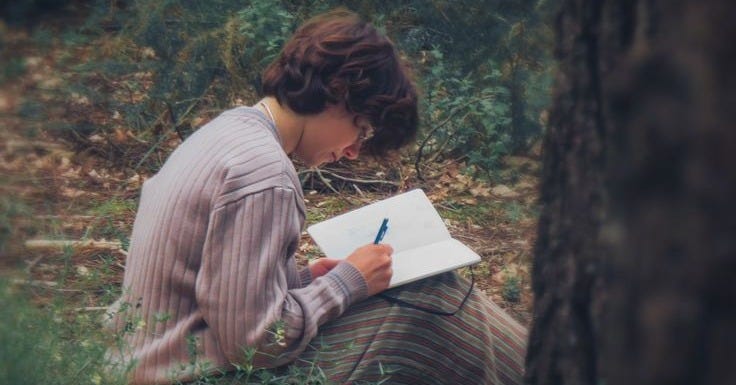
About six months ago, I wrote a piece in which I mentioned something personal for the first time.
Nothing too personal, nothing sensational. Just an honest observation about the sadness I sometimes feel on Sunday afternoons, when it’s raining outside, I have nowhere to escape to, and there’s nothing to occupy my mind.
It’s because it’s precisely in those moments that you realize how tired you are of everything, when there’s nothing to do. I wrote it with care and all the emotion I was capable of. I posted it.
The result: four views. One of them was my own, while I was checking to see if it had published correctly.
I closed my laptop and didn’t open it for three whole weeks.
Not because I was angry, but because I felt awkward. I was ashamed that I had written it at all. It was as if I had said something out loud in a room full of people, and no one had turned around.
I’m sure you’ve been in a group of people, said something important, and no one turned around. Afterward, you might even feel silly for having said anything at all.
Well, that’s exactly how I felt about that post.
Writing when you feel small is different from anything else.
It’s not like doing something you’re just not good at — like parallel parking (which I’m absolutely terrible at) or cooking risotto. In those cases, failure is technical. It can be fixed with a few more tries.
Here it’s different, because you’re writing with yourself. You’re putting in not just words, but also the way you think, the things you care about, and the version of the world that only you see.
And when no one responds, the feeling isn’t “I wrote badly.” The feeling is “I am unnecessary.”
Of course, you know that this is irrational. But knowing and feeling are two completely different things.
Then you see the others.
The author you’ve been following for months posts something — a quick, casually written piece, almost obvious.
And it gets two hundred comments. People share it. They write to him that it’s “exactly what they needed.” He replies to each one with a single sentence, as if it’s no big deal.
And you wrote a better sentence than anything in that post, and you know it, but no one saw it.
In moments like these, you don’t envy their success. Don’t get me wrong. We’re not talking about any kind of malice or negative feelings toward other authors here. That’s the last thing I’d encourage, really.
You envy the self-confidence. The ease with which he publishes. The fact that he doesn’t seem to have asked himself if he has the right.
“Do I have the right to write this?”
That’s the question few people admit to themselves, the one that echoes in their heads as they hesitate to hit the “Publish” button.
I’ve asked myself that question countless times, especially when I discovered Substack.
My partner encouraged me to join in, but I kept finding excuses. Until one day, after dozens of excuses, I sat down and said, “Well, I don’t really have the right to write there. I’m not a writer; I’ve never written anything in my life. This place is for real professionals.”
Anyway, here I am now. And I know I’ve said some pretty ridiculous things.
But the question “Do I have the right to write this?” is so well disguised under logic and self-criticism that sometimes we hear it as reason.
We tell ourselves: I’m being realistic. I know my level. I’m not fooling myself.
But realism and fear sound the same when they’re in our heads.
That feeling of inadequacy doesn’t go away when you get better.
It doesn’t go away when you gain followers. It doesn’t go away when someone writes to you saying your post helped them.
(Wait, wait, don’t lose hope, hear me out…)
It just… mutates. Sounds strange, doesn’t it?
It changes form. It shows up in new places.
I know people with thousands of readers who ask themselves the same thing before every post: will anyone even read this? Is it too personal? Is it too boring? Is it too much?
Feeling small sometimes isn’t a phase you go through. It’s a companion.
The question is whether you’ll let it decide when you publish.
If you pay close enough attention, you’ll recognize it
There’s a moment in writing —and not just in writing— when the text ceases to be yours. When the words are no longer for you, but for that reader you’ve never met and don’t even know exists.
The one who will open their phone at 11:40 p.m., stumble upon your text, and feel a little less alone with something they once thought was theirs alone.
You write for them. Even when you don’t know who they are.
Even when you don’t know if they exist.
Do you hear me?
Write about them.
And if you don’t believe me, I’ll tell you very quickly why.
A long time ago, I stumbled upon a post by an author who had maybe two or three subscribers. I instinctively decided to open the latest post, even though the title didn’t mean anything to me. It didn’t even have anything to do with what was written inside.
The text was about family relationships, which I’ve always admitted I struggle with.
Anyway. I was so moved by what was written that I opened up in the comments in a way I haven’t even opened up to my closest friends and family.
I got a reply.
“Thank you so much, Tsetsy! You’re my first comment!!! I didn’t even know anyone was reading what I write.”
That’s why I’m telling you this. You may not see it or feel it, but someone out there is reading what you write and is just as moved by it as I was by that text.
That’s when the idea of helping other Substack authors first came to me.
Because that author’s work was brilliant, but no one was seeing it.
Maybe because the author wasn’t sure how to show it to the world, or simply because they weren’t sure how to title it. There could be many reasons.
But one thing is certain—there are so many wonderful authors on Substack who just need a nudge and some help.
And now that I’ve mentioned this mission of mine, I want to share something else with you.
Not Exactly Ana launched a Visibility Project three months ago.
This is a new Substack magazine, featuring stories by brilliant writers, and copies are already flying off the shelves.
If you’re interested in the project, I’ll leave the issues here for you to check out, and if you’d like to get involved, please contact Not Exactly Ana
The three weeks I didn’t write after that Sunday post
I remember them well, not with bitterness, but rather with a kind of understanding of my older self.
Because in the end, I opened the document again. Not because a unique idea struck me or I magically became more confident, but simply because it was Sunday afternoon, it was raining, and I had something I wanted to say. And it felt increasingly uncomfortable not to say it.
I posted the text. Four reads. Then five. Then someone shared it without comment, just a link, no words. And I didn’t know if they liked it, or just found it interesting, or just sent it to a friend as a joke.
But I posted the next one. And the next.
I’m not telling you to “keep going no matter what.”
That phrase is cliché, and we both know it.
I’m telling you that writing when you feel small is actually the only honest kind of writing. Because when you feel small, you write without a mask. You write without pretending to know more than you do.
And right there in that corner, where it’s uncomfortable and uncertain and not at all heroic, lies the text for which one day someone will write to you: “That’s exactly how I feel, too.”
Open the blank page and write. Don’t wait until you grow up.



I've been around the social media block, as I'm sure you and many others here have as well, and I've learned that it's simply not worth the wasted energy. It's not about you or your writing. It's about an algorithm that we cannot see or predict. So, I learned a long time ago to keep my head down and just keep at it. Why not? I love to write. But I 100% understand where your journey has taken you. We (writers) all were there at one time or another - right? Looking for the audience or engagement. Writing is not for those who can't handle solitude, that's for sure. Because often times, when you're checking for comments, likes, or any engagement --- it's crickets.
Thanks. I write for myself, in a deep dark echo chamber that may never allow me to see another person, and I decided the lonely solo road was the one I had been placed on- might as well finish the journey